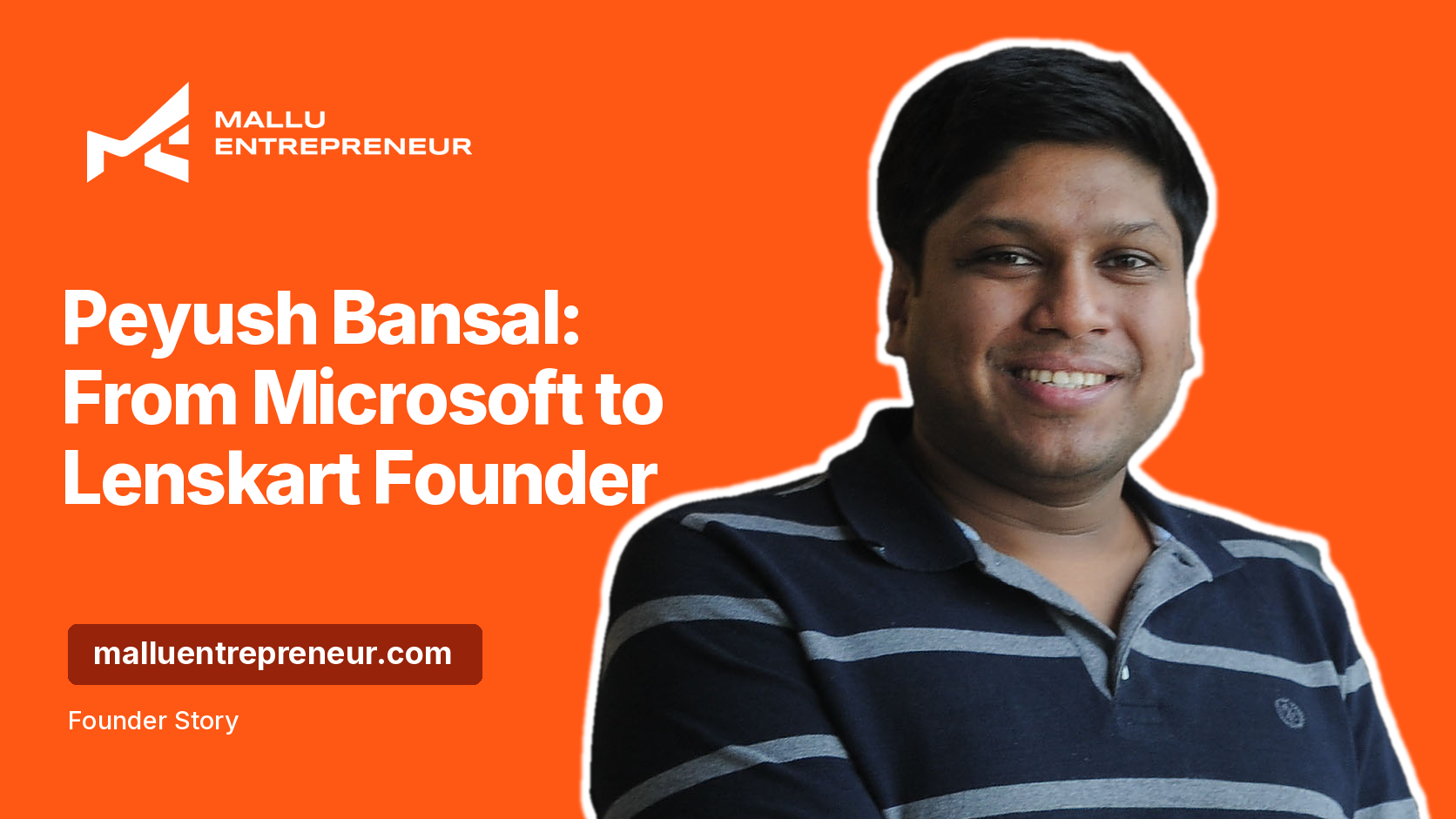
Photo: Peyush Bansal in 2015. Photo by Ajayrwat, licensed CC BY-SA 4.0 via Wikimedia Commons. Cropped, with the background removed for the banner.
In 2007, a young Microsoft programme manager was invited to dinner at Bill Gates' home. Gates spoke about getting a computer into every home and the next big goal, ending malaria. The next day, Peyush Bansal told his manager he was quitting. He did not yet know what he would build. Years later, that decision became Lenskart. This is the Peyush Bansal story, with 5 lessons for young founders.
Who is Peyush Bansal?
Peyush Bansal is the co-founder and CEO of Lenskart, an eyewear retailer that sells online and in stores. As of March 2026, Lenskart had a market value of Rs 88,583 crore and a presence in 15 countries, after a blockbuster IPO in 2025 (Forbes India).
Missing the IIT seat
Bansal spent two years preparing for the JEE and missed an IIT seat by a small margin. "It was shattering," he told Forbes India. His SAT scores were not enough for a top US engineering school, so he went to McGill University in Canada. Money was tight, he did not get university housing, and he rarely slept more than four hours a night for four years.
From a housing site to Lenskart
- A problem he lived. His own struggle to find housing in Canada led him to start SearchMyCampus.com, a student accommodation platform.
- A book that stuck. He says he read Subroto Bagchi's The High-performance Entrepreneur about 200 times. It gave him the aim of building a company the world would not be the same without.
- Learning the category on the ground. After reading that 40% of the world's visually impaired people live in India, he spent a year working part time at a spectacles shop in Delhi's Laxmi Nagar. One number stood out: 75% of people who needed glasses were not wearing them.
- First funding. For a short period SearchMyCampus.com funded Lenskart, and then venture investors showed interest. "We did not even know how to negotiate the term sheet, we ended up giving away 40 percent," he says.
Key decisions that shaped Lenskart
- Focus on one thing. Around 2011, Lenskart sold watches, jewellery and bags too. Investor Ronnie Screwvala asked why they were doing everything but eyewear. Cutting the rest meant losing nearly 80% of revenue at the time, but it became the turning point.
- Own the supply. Frames mostly came from China and lenses from France, which made glasses costly. Lenskart worked on making them affordable. "If you can solve affordability, you can solve distribution," he says.
- Design from insight. A person told him they did not get their eyes checked because "I don't want to be a patient." Lenskart stores avoid lab coats and harsh lighting.
- Online and stores together. The company started online, found customers wanted eye tests, tried home testing, then opened stores.
- Going global. It entered Singapore, which Bansal describes as the myopia capital of the world, and in June 2022 announced a majority stake in Japan's Owndays, a deal valued at roughly $400 million.
The IPO
Lenskart's IPO raised Rs 7,278 crore and listed on November 10, 2025, after being subscribed more than 28 times (Forbes India). Bansal told The Economic Times that public markets "bring greater responsibility, but they do not change our orientation."
5 lessons for young founders from Peyush Bansal
- Build from a problem you have felt. A housing struggle led to his first startup.
- Go and learn the ground reality. He worked in an eyewear shop for a year before building the company.
- Be willing to narrow your focus. Cutting the side products cost most of the revenue, and helped the company win.
- Listen to how customers feel. "I don't want to be a patient" changed store design.
- Back your decisions, even unpopular ones. Singapore and Owndays both drew doubts. He says that a year later, board members told him he was right.
Sources
- Forbes India, Peyush Bansal And Lenskart: From Microsoft Exit To Global Eyewear Giant (March 30, 2026)
- The Economic Times, Public markets add responsibility but won't change core focus: Lenskart CEO Peyush Bansal (July 24, 2026)